
January 30, 2026
Combating Social Isolation
For many older Americans, aging can bring unexpected solitude. Retirement, the loss of loved ones and changes in health or mobility often mean fewer daily interactions and more time spent alone. What once was a quiet home can slowly become an isolated one, leading to feelings of loneliness that impact both emotional well-being and physical health. Studies show that chronic loneliness can be as harmful as smoking, increasing the risk of heart disease, depression and cognitive decline.
Yet, while isolation is common, it is not inevitable. Older Americans can (and often do) build new friendships, rediscover purpose and find joy in community. By understanding what drives isolation and intentionally creating opportunities for connection, older Americans can transform their later years into some of the most fulfilling of their lives.
Understanding the Roots of Isolation
Social isolation often develops gradually through life transitions that affect how people live and interact. Retirement, for example, can suddenly remove the sense of daily routine and camaraderie that a workplace provides. The death of a spouse or close friends can leave emotional and social voids that are hard to fill. Health changes such as reduced mobility, chronic pain or hearing loss can make it physically harder to participate in activities that were once easy.
Beyond personal circumstances, there are social factors that contribute as well. Transportation barriers, limited walkability and a growing dependence on technology can make it harder for older Americans to stay connected in a world that moves and connects primarily online. Communities that were once comprised of close-knit neighborhoods and held frequent gatherings might feel more fragmented and impersonal. The result is that many older Americans find themselves socially adrift, even when surrounded by people.
Friendship at Any Age
It’s a common misconception that deep, meaningful friendships are only formed in youth. In truth, the capacity for friendship never fades and later-life friendships often carry an even greater sense of authenticity and appreciation than ones formed in childhood. Older Americans have the wisdom to know what they value in relationships and the ability to connect with those on a deeper level.
Friendship can be one of the most powerful antidotes to loneliness. A good friend can provide emotional support, laughter and shared experience. Even one or two close friendships can dramatically improve well-being. Researchers find that seniors with strong social ties are more likely to live longer, experience fewer health problems and recover more quickly from illness.
Finding new friends in later life might seem daunting, but there are so many opportunities for connection. Senior living communities, hobby clubs, and religious and volunteer organizations can all provide spaces where like-minded people gather. Many communities and senior living organizations host regular social activities, fitness classes or communal meals designed to encourage interaction.
What matters most is being willing to take that first step, strike up a conversation or attend an event.
How Purpose Leads to a Longer, Happier Life
While friendships provide connection, purpose provides direction. Having a sense of purpose is one of the strongest predictors of happiness and longevity. In fact, research shows that people with a clear sense of purpose live longer, recover from setbacks faster and maintain better cognitive health than those who feel aimless.
Purpose can take many forms. For one person, it might be volunteering at a local school or community center, while for another it could be mentoring younger family members, tending a garden or sharing life stories through writing or art. Even small, consistent activities can bring immense fulfillment- activities like walking a dog, checking in on a friend or helping organize community events.
In AHEPA senior living communities, we strive to weave purpose into daily life through programs that encourage learning, creativity and contribution. These opportunities help residents stay engaged, connected and proud of the ways they continue to impact the world around them.
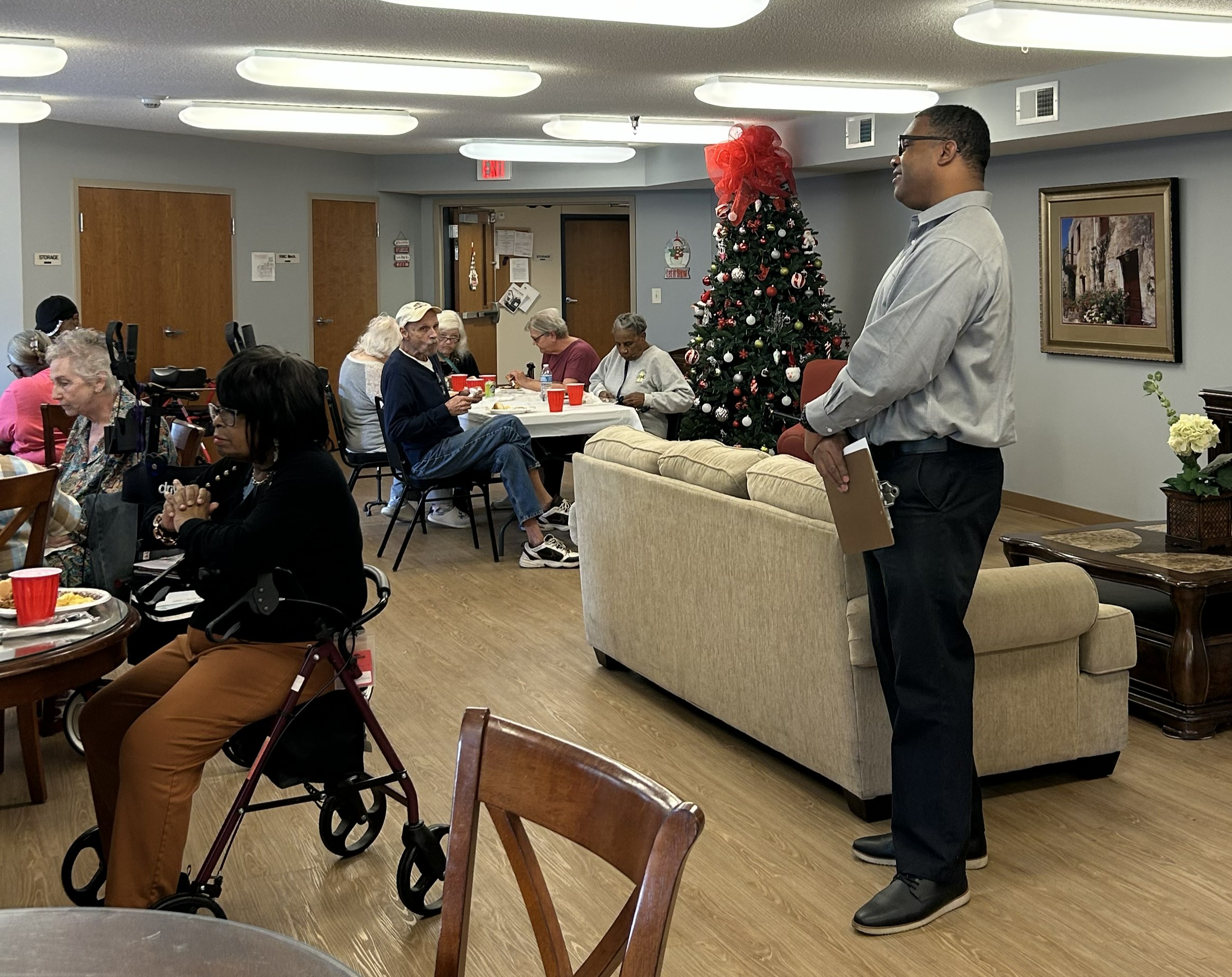
For example, at AHEPA 310 Apartments of Citronelle, the service coordinator used a shared meal funded by gift cards as an opportunity to bring residents together and spotlight the growing issue of social isolation among older adults. During the gathering, residents learned about the definition and health risks of social isolation—including links to depression, heart disease, cognitive decline, and higher mortality—while also discussing the unique advantages of living in a close-knit senior community. The program emphasized simple, resident-driven connections, encouraging everyday interactions and group activities such as movie nights, clubs, games, and shared interests as practical ways to strengthen social bonds and reduce isolation.
Building Communities That Connect
Combating social isolation isn’t an individual effort, it’s a community responsibility. The environments where older Americans live play a major role in determining how connected they feel. A neighborhood or senior living community that fosters interaction can dramatically improve quality of life.
That’s why we build communities centered on connection. Through social events, wellness programs and volunteer opportunities, AHEPA communities help residents stay active and engaged with both peers and their larger community.
Connection as the Key to Aging Well
Social isolation may be one of the greatest challenges facing older Americans today, but it is also one of the most solvable. Friendship, purpose and community are powerful forces that can restore joy and belonging at any stage of life. By reaching out to a neighbor, a friend or a community group, older Americans can build connections that give life warmth and meaning.
As we grow older, our worlds may grow smaller, but our capacity for connection never diminishes. It only takes a single conversation, a shared laugh or a new sense of purpose to open that world back up again. After all, it’s never too late to make a friend, find purpose or rediscover joy. Find a community here, or contact us for more information.